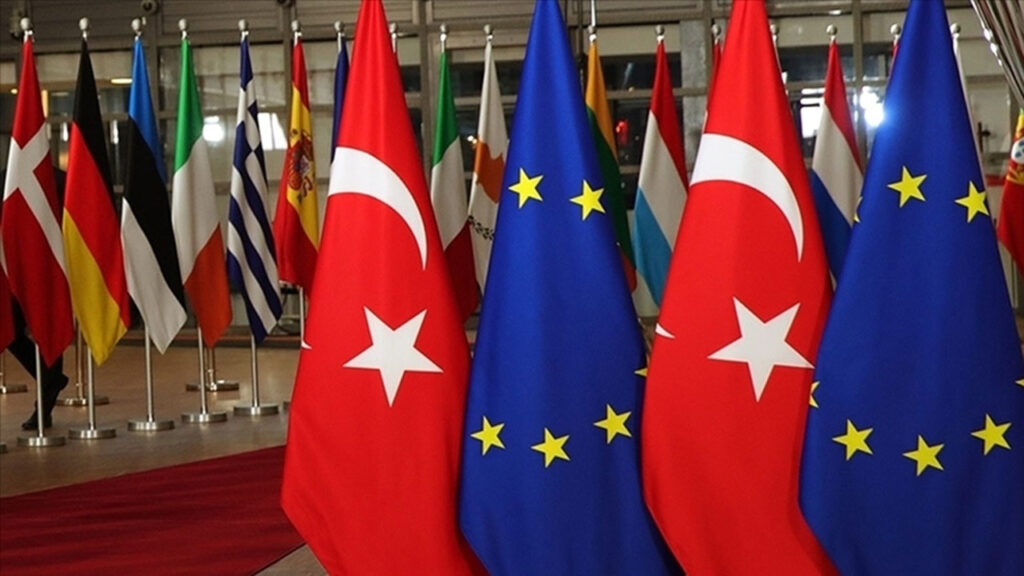
DEİK (Foreign Economic Relations Board) is pushing in Brussels for Türkiye–EU rapprochement on the trade front, though everyone knows politics is the real obstacle.
Everyone is aware that the main obstacle to rapprochement between Türkiye and the European Union is political. For years it was Osman Kavala, Selahattin Demirtaş, the European Court of Human Rights (ECtHR) rulings—now the Ekrem İmamoğlu case has been added on top of all that, increasing the barriers to meeting the Copenhagen Political Criteria, which are prerequisites for EU membership. Leaving membership aside, even a technical/trade matter like updating the Customs Union—which would benefit both Türkiye and the EU—runs into a political obstacle: the Cyprus issue.
Any step the EU takes toward Türkiye—an EU that has 27 member states, a population of 450 million, and a $20 trillion economy, making it the world’s second-largest economy after the U.S. and ahead of China (if counted as a single country)—is blocked by the veto of the Greek Cypriot government, which has a population of 1.3 million and accounts for just 0.14 percent of the EU economy.
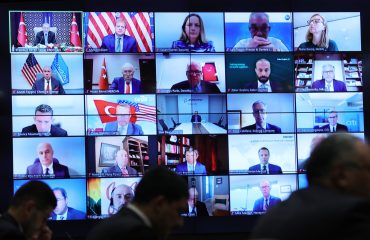
Today, at the “EU–Türkiye Business Summit” held on November 17 in Brussels in cooperation with the Foreign Economic Relations Board (DEİK) and the European Business Summit (EBS), the aim is at least to achieve commercial rapprochement.
The EU’s Security Crisis and Türkiye
DEİK President Nail Olpak summarized the situation at a reception on 16 November at the residence of Türkiye’s Permanent Representative to the EU, Faruk Kaymakçı, saying:
“There is a security crisis in Europe. The EU should see us as more than just a security partner.”
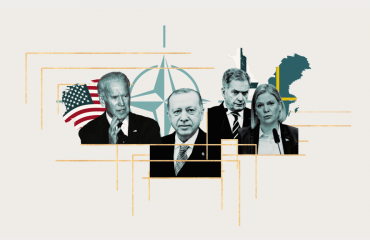
The security crisis the EU is experiencing—driven by the Russia–Ukraine war and sanctions on one hand, and Donald Trump’s return to power in the U.S. on the other—has created real opportunities for Turkey, but political issues prevent them from being fully realized.
Mehmet Ali Yalçındağ, President of Türkiye–Europe Business Councils within DEİK, says the international political environment shows the need to “write a new story” in Türkiye–EU relations. He adds, “The world wonders what the U.S. says, what China says, but nobody wonders about the EU anymore,” emphasizing that the EU could regain geopolitical influence together with Türkiye.
The business world, however, wants results as soon as possible. Olpak summarizes the agenda as follows:
“The topic we discuss most is the Customs Union. The problem is this: goods move freely, but the trucks that carry the goods face quotas, and businesspeople who make the deals face visa problems.”
Political Issues While Waiting
Despite all promises, no progress has been made on visa issues. Now a new line has appeared: “You’ll see improvement in your second and third visas.”
As Olpak puts it, “bosses” at least want easier access for their own visas. Meanwhile, in tourist and student visas, the EU attitude seems to be: “If you don’t want to come, then don’t.”
Ambassador Kaymakçı’s reference to “visa facilitation” instead of “visa liberalization” may indicate that Ankara is aligning with the business community’s strategy of lowering expectations.
Thomas Ossowski, the former EU Ambassador to Ankara and now Germany’s Permanent Representative to the EU, says that the EU finds its visa regime toward Türkiye unacceptable—but saying so has not changed anything. Six of the conditions foreseen for visa liberalization in the 2016 migration deal are still pending.
Let’s Do Business With Türkiye—But Turks Can Wait
Yet, the EU is also interested in boosting commercial ties. I learned that a participation list of 400 people—250 from EU countries—was prepared for the meeting at Brussels’ historic Egmont Palace, and that many more were on the waiting list. EU investors want to expand their business in Türkiye and use Türkiye as a gateway to the Middle East, the Caucasus, and Central Asia. But they want to do so without opening space for Turkish investors—essentially using Türkiye’s geography while excluding Turkish businesses.
In other words, there is an unfair double standard summarized as: “Let’s do business with Türkiye, but Turks should wait.”
Alongside political problems, this is another issue Turkish businesses struggle to overcome—seen clearly in the trucking quota issue.
Şerafettin Aras, President of the International Transporters Association, who came to Brussels for the summit, expressed concern that traffic between Europe and the Middle East has increased with the end of the Syrian war, but because Türkiye’s quotas have not increased, the lion’s share of this traffic will go to EU countries.
It Comes Down to Erdoğan
It’s clear that President Erdoğan wants to use Türkiye’s prominence on issues like Syria, the Russia–Ukraine war, and a Gaza ceasefire to move closer to the EU.
Even though he emphasized “full membership” in his meeting with German Chancellor Friedrich Merz on October 30 in Ankara, everyone knows this is impossible under the EU’s current unanimity structure—even if all other problems were resolved.
But as we have seen, attempts at rapprochement on political issues run into political issues again.
In Ankara, the prevailing view is: “If Europe needs our soldiers, then they should set political issues aside.” This is the opposite of the EU’s “If they don’t want to come, then let them not come—indeed, let them never come” attitude.
Yet within the political bracket lie issues that would improve the rule of law and democratic quality in Türkiye—politically and economically—including a Türkiye Without Terrorism process.
The Turkish business community is doing everything it can to achieve at least commercial rapprochement with the EU. It tries to influence its partners in Europe in Türkiye’s favor and hopes that this effort will influence political mechanisms in both Brussels and Ankara. We continue to watch.