TBMM Commission’s 4 December Meeting Seen as Critical for 2026 Phase of “Terror-Free Türkiye”
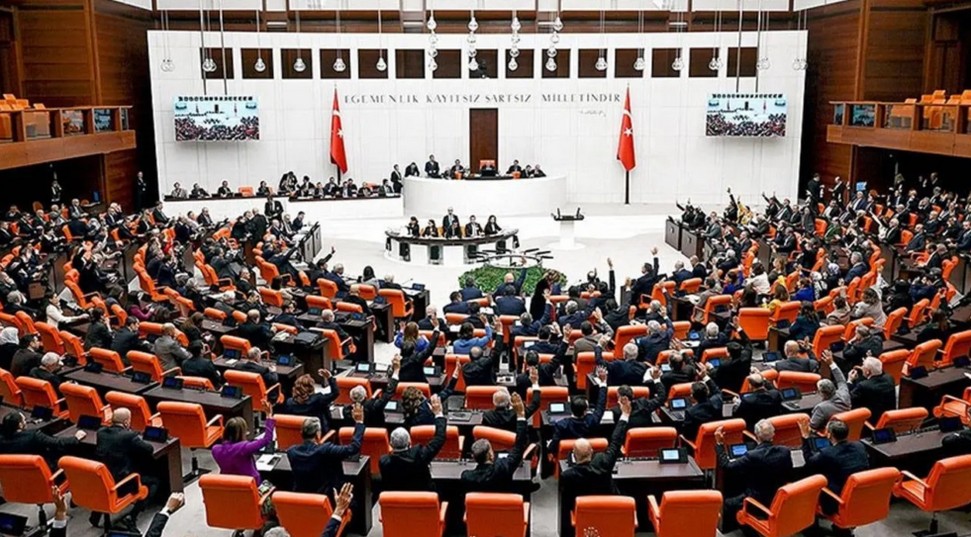
The 4 December meeting of the Turkish Grand National Assembly (TBMM) Commission is viewed as a crucial milestone for the AK Party–MHP alliance’s “Terror-Free Türkiye” initiative as it enters the first half of 2026. In his opening remarks on 5 August, TBMM Speaker Numan Kurtulmuş emphasized that the Commission’s mission is not to draft a new constitution or conduct a legal reform, but—essentially—to create the parliamentary conditions for a political solution to the Kurdish issue through the PKK’s disarmament and dissolution.
Kurtulmuş also stated that the proposed Special Law for the Terror-Free Türkiye process would only be enacted once the PKK’s dissolution and disarmament were verified by the Turkish Armed Forces (TSK) and the National Intelligence Organization (MİT). However, this does not prevent the Justice Commission from preparing draft legislation. Similarly, the DEM Party’s demand for “equal citizenship”—a point also raised frequently by the PKK—and its claim that this requires amendments to three constitutional articles is expected to surface during Commission deliberations.
What Does “Equal Citizenship” Mean?
For those unfamiliar with the concept, “equal citizenship” (or “equal nationality”) may seem confusing, since equality before the law is already stated in the Constitution. PKK leader Abdullah Öcalan began using the term in 2004 alongside the notion of a “democratic republic.”
The DEM Party listed it among its primary goals at its 25 November 2023 congress. DEM sources define it as a pluralistic model of coexistence that emphasizes local democracy, mother-tongue rights, and collective identity freedoms in contrast to a centralized, unitary state structure.
At a recent closed-door meeting in Ankara, one participant argued that achieving this concept would require amendments to three specific articles of the Constitution. These articles must not be confused with the politically sensitive first four articles, which typically dominate public debate—especially regarding President Erdoğan’s eligibility for re-election.
This raises a key question: Could the AK Party and MHP consider modifying these three articles to secure DEM’s support for a new constitution?
Which Three Articles?
• Education – Article 42
Ensures the right to education and stipulates that teaching must be conducted under state supervision in line with Atatürk’s principles and contemporary scientific standards.
• Citizenship – Article 66
Defines anyone bound to the State of Türkiye by citizenship as “Turk,” and outlines conditions for acquiring or losing citizenship.
• Local Governments – Article 127 (relevant section)
Allows the Interior Minister to suspend elected local officials who face investigations related to their duties—a clause central to debates over trustee (kayyım) appointments.
Political Will Required
In summary, the amendments sought concern:
• allowing education in mother tongues,
• modifying the “Turk” identity clause in citizenship, and
• not only addressing trustee appointments, but expanding local autonomy in local governance.
In the past, the MHP has strongly opposed changes to these articles. Yet given that the MHP has taken political ownership of the Terror-Free Türkiye project, some question whether a compromise may now be possible—though this remains unresolved.
Before constitutional reform, however, significant progress could be achieved through ordinary legislation. Revisions to the Anti-Terror Law, Penal Code, Execution Law, and Municipalities Law would advance the Terror-Free Türkiye initiative while also easing Türkiye’s visa liberalization process with the European Union.
Moreover, several steps require no legal amendments at all—such as implementing Constitutional Court and ECHR rulings, reversing trustee appointments, or ensuring elected politicians are tried without pretrial detention. These measures would not only support the process but also help reduce tensions between the government and the opposition.
Ultimately, all these issues depend on political will, and they are expected to remain prominent in the public and political debate in the coming weeks and months.