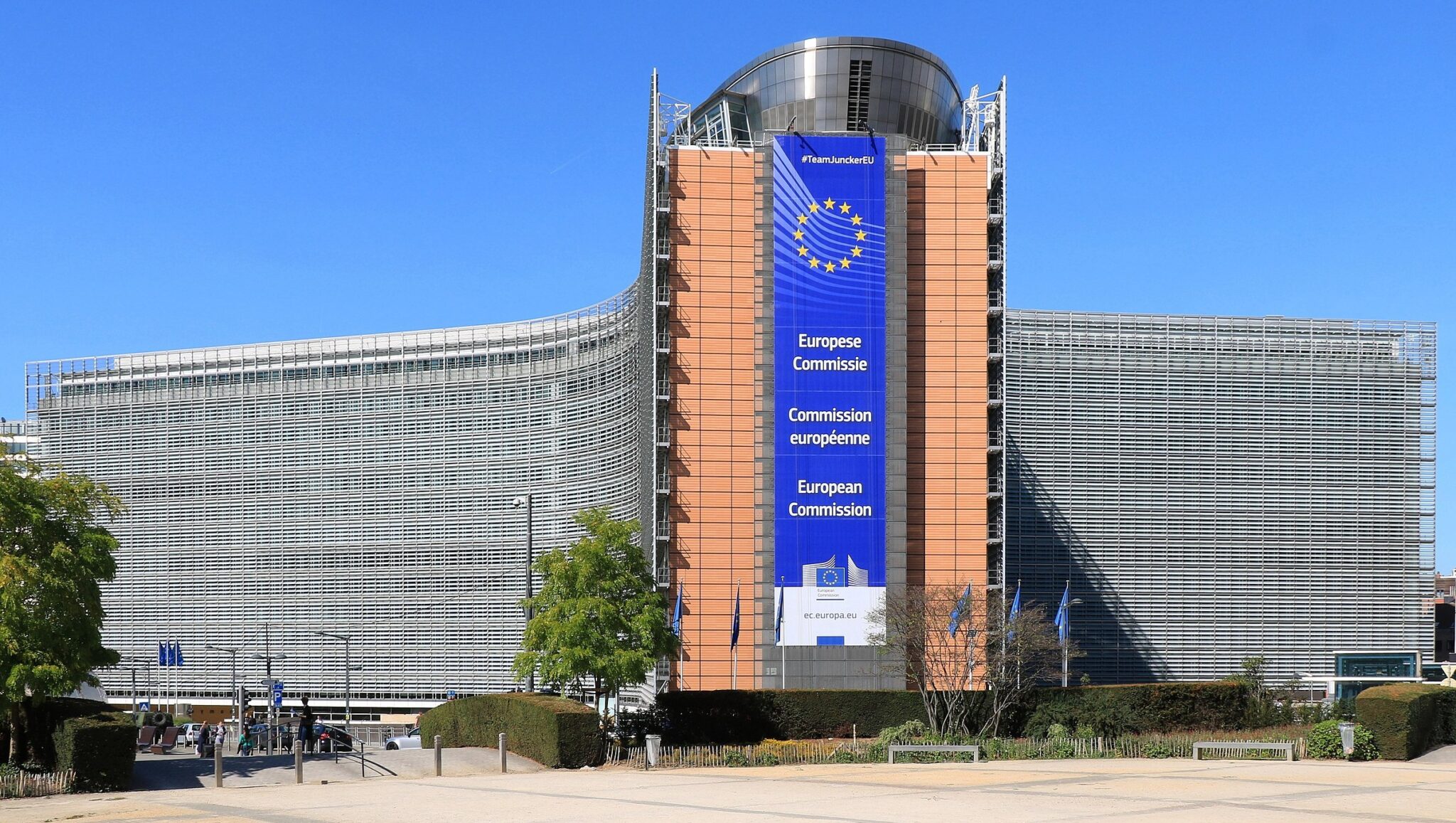
The Türkiye–EU relationship needs a new narrative. The EU needs to see Türkiye as a strategic lever.” (Photo: Wikipedia)
The longer version of the headline is straightforward: Why are letters addressed to Brussels no longer effective—and why does the European Union need a new story with Türkiye?
When I first came across the open letter prepared by the Turkish business community through DEİK and published on 31 January as a paid announcement in the Financial Times, one thought immediately crossed my mind:
Well-intentioned, constructive, diplomatic—yet, unfortunately, far below its potential impact.
This is not a criticism of those who drafted the letter. On the contrary, it acknowledges the depth of the challenge. Because Türkiye–EU relations are no longer at a stage where open letters, technical appeals, or polite formulations can move the relationship forward. What we are facing now is a strategic decision point.
Not a Letter Problem, but a Method Problem
Frankly, a fraction of the budget spent on that advertisement could have generated far greater resonance in Brussels if used instead to commission a powerful editorial from a respected European opinion-maker or former political leader.
What emerged, after all, read less like a strategic business call and more like a diplomatic note.
There is a crucial distinction here. Diplomats speak the language of courtesy. Business leaders speak the language of interests, risks, and trade-offs.
What moves Europe today is not reassurance, but a sense of urgency—a narrative that makes clear the cost of delay and the risks of inaction.
And Europe is navigating one of the most challenging phases in its modern history:
• Industrial competitiveness is eroding.
• Demographics are turning sharply against growth as populations age and labour markets shrink.
• Energy, food, and supply-chain security remain fragile.
• Defence and security architectures are under strain.
• The US–China rivalry is squeezing Europe into an uncomfortable strategic middle ground.
In Brussels, the core question is brutally simple: “Why now?”
Not a Candidate, but a Strategic Lever
The published letter fails to answer this question convincingly.
Yet the answers are already there. If Europe wants to remain a global actor, it cannot merely defend rules; it must expand its scale, secure its neighbourhood, and redefine its strategic partnerships.
Continuing to frame Türkiye primarily as an “accession candidate” misses the essence of the issue.
From Iran to Russia, from Ukraine to the Caucasus; from the Western Balkans to the Eastern Mediterranean; from Syria to the Black Sea—Türkiye sits at the centre of every major geopolitical fault line confronting Europe today. This is not geographical coincidence; it is geopolitical reality.
Türkiye simultaneously functions as:
• A critical military actor along Europe’s southern and eastern security arc,
• A security and intelligence partner with deep operational reach into crisis zones,
• A migration stabiliser hosting millions of refugees and thereby contributing directly to Europe’s social and political stability,
• A strategic corridor for energy, electricity, renewables, and—soon—hydrogen,
• A vital buffer in food production and logistics,
• An indispensable manufacturing and supply-chain hub for an Europe seeking to reduce over-dependence on China,
• A young, skilled, and scalable labour pool at a time when Europe itself is ageing rapidly.
This reality has long since moved Türkiye out of the “waiting room.” Türkiye is already a de facto component of Europe’s strategic architecture.
Technical Accuracy, Strategic Blindness
Customs Union modernisation, visa restrictions, negotiation chapters—yes, all of these matter. But they are technical truths, not strategic answers.
What Europe lacks today is not technical progress, but political vision.
And that vision can only emerge through direct engagement at the highest political level—between presidents, prime ministers, and key European leaders. Because what is at stake is not another enlargement dossier, but the future shape of Europe as a global actor.
The Bigger Picture Matters
The open letter is sincere. But on its own, it cannot move the relationship meaningfully forward. It only makes sense if it forms part of a much broader strategic effort.
What is truly required is:
• A clear, consistent, and compelling strategic narrative addressed to European public opinion,
• High-level summit diplomacy,
• Institutionalised dialogue with Europe’s business ecosystem through platforms such as BusinessEurope,
• A comprehensive integration framework encompassing security, defence, intelligence, migration, energy, and food resilience.
Absent this broader architecture, even the most well-meaning initiatives will remain limited. Resources—financial, political, and reputational—will be spent without adequate return.
The Need for a New Story
The problem is not whether the letter was well or poorly written.
The problem is that Türkiye–EU relations are still being discussed in the language of the 1990s.
But the world has changed. Europe has changed. Türkiye has changed.
The real question is no longer whether Türkiye is “ready” for Europe.
The real question is whether Europe is ready to place Türkiye at the centre of a strategic integration model capable of overcoming its own structural dead ends.
A Europe that can answer this question with courage would not only strengthen its relationship with Türkiye—it would strengthen itself.
Otherwise, Türkiye will continue on its own strategic path.
And Europe will do the same.
Whether that divergence becomes manageable—or costly—will be Europe’s choice.