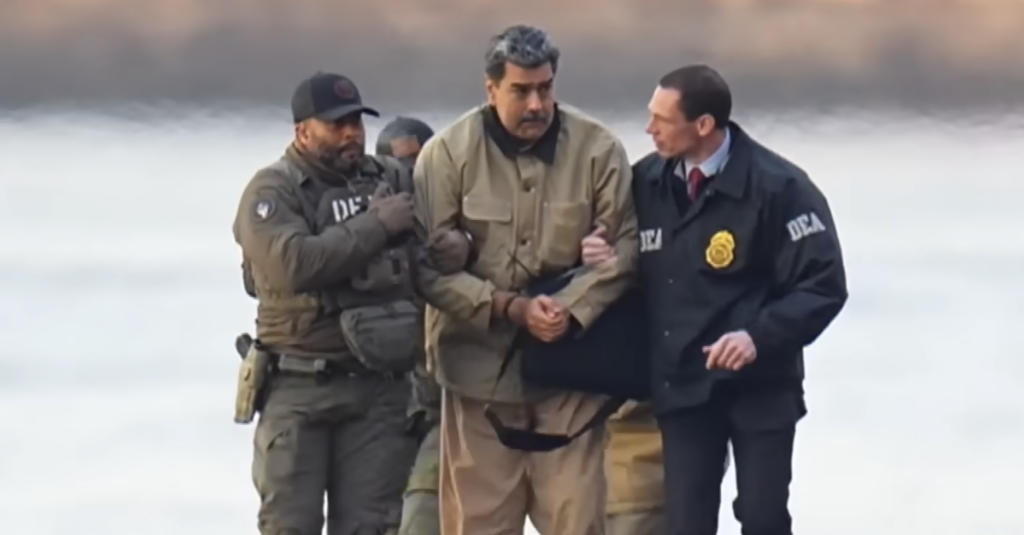
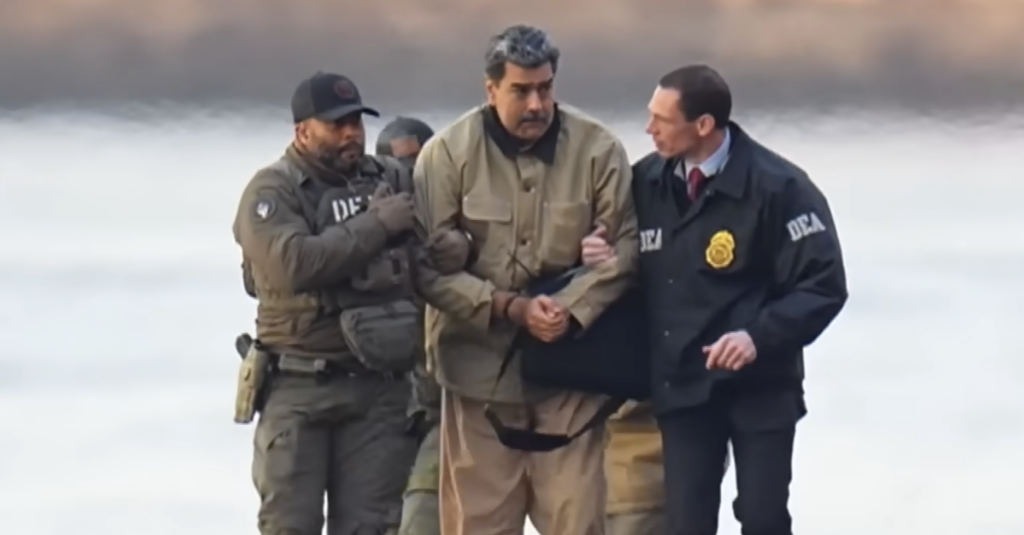
Official statements asserting that Washington will determine Venezuela’s political direction and the disposition of its energy exports confirm that this exceeds the ordinary doctrines of intervention and approaches a functional substitution of state authority. (Photo: Screenshot)
Kutluhan Bozkurt & Gönenç Hacaloğlu (Gedik University, İstanbul, Faculty of Law)
The second law of thermodynamics is often summarized as the idea that systems tend to fall into disorder over time unless energy is constantly applied to maintain them. In this context, entropy is important because it provides a measure of disorder within a system. It is possible to establish a conceptual connection between international law and disorder by analogy with the second law of thermodynamics and the concept of entropy. States determine their strategies for international engagement in accordance with national and international interests and policies. This can be seen as a contributing factor to entropy within the international community and the international legal order. Therefore, the United States’ intervention in Venezuela can be understood as contributing to entropic tendencies within the international legal order.
US Military Operation In Venezuela
The recent military and law-enforcement actions undertaken by the United States in relation to Venezuela — including a high-profile military operation that resulted in the forcible capture of President Nicolás Maduro and a series of seizures of oil tankers linked to Venezuelan exports — have occurred in a broader practice in which core principles of sovereignty, the prohibition on the use of force, and freedom of the high seas have been widely criticized as being rendered operationally hollow. These measures should not be understood as isolated incidents within the international order, but rather as part of a broader pattern in which certain states exercise administrative and coercive power over others without being bound by the ordinary regime of sovereign equality and reciprocity.
UN Charter and International Law
The apprehension and extraterritorial transfer of a sitting head of state, absent explicit authorization by the United Nations Security Council or the exercise of the inherent right of self-defense under Article 51, constitutes a violation of Article 2(4) of the UN Charter, which protects the territorial sovereignty and political independence of states. Regardless of whether the international recognition of a government may be contested or not, a head of state in office continues to embody the legal personality of the state. A coercive seizure directed at such an official therefore amounts to an intervention against the state itself, reflecting a mode of power in which sovereignty is formally acknowledged but substantively suspended.
The unilateral seizure by the United States of a foreign-flagged tanker on the high seas, based on domestic sanctions law, illustrates a similar displacement of legal limits in the law of the sea. Under the principles of freedom of navigation and flag-state jurisdiction, merchant vessels on the high seas fall under the exclusive authority of their flag state, subject only to narrowly defined exceptions or to enforcement measures authorized by the Security Council.
US as “Trustee State”
Taken together, these practices indicate that Venezuela has not only been subjected to sustained political and economic pressure but has been placed in a position where its core sovereign functions — including control over political authority, external economic relations, and public administration — are being exercised under the influence of an external power. Official statements asserting that Washington will determine Venezuela’s political direction and the disposition of its energy exports confirm that this exceeds the ordinary doctrines of intervention and approaches a functional substitution of state authority. This configuration corresponds to what may be described as a “trustee state”: a formally sovereign entity whose essential powers are, in practice, exercised by another state. Such arrangements hollow out sovereignty in practice, transforming it into a juridical shell through which hierarchical forms of global governance are imposed under the guise of legality.
The United States’ interventions appear to contribute to increasing entropy in international law, adding to disorder in the system. In this context, one could argue that the apparent rise in entropic tendencies stems from interventions that have, in effect, created forms of trusteeship. A significant further increase in the disorder of international law could, hypothetically, be expected if similar interventions were carried out in Cuba, Greenland, or other states.