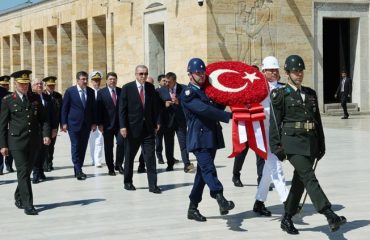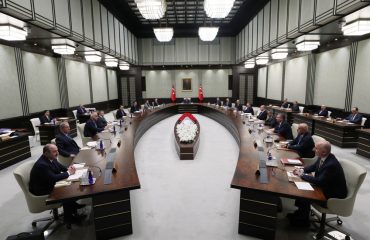
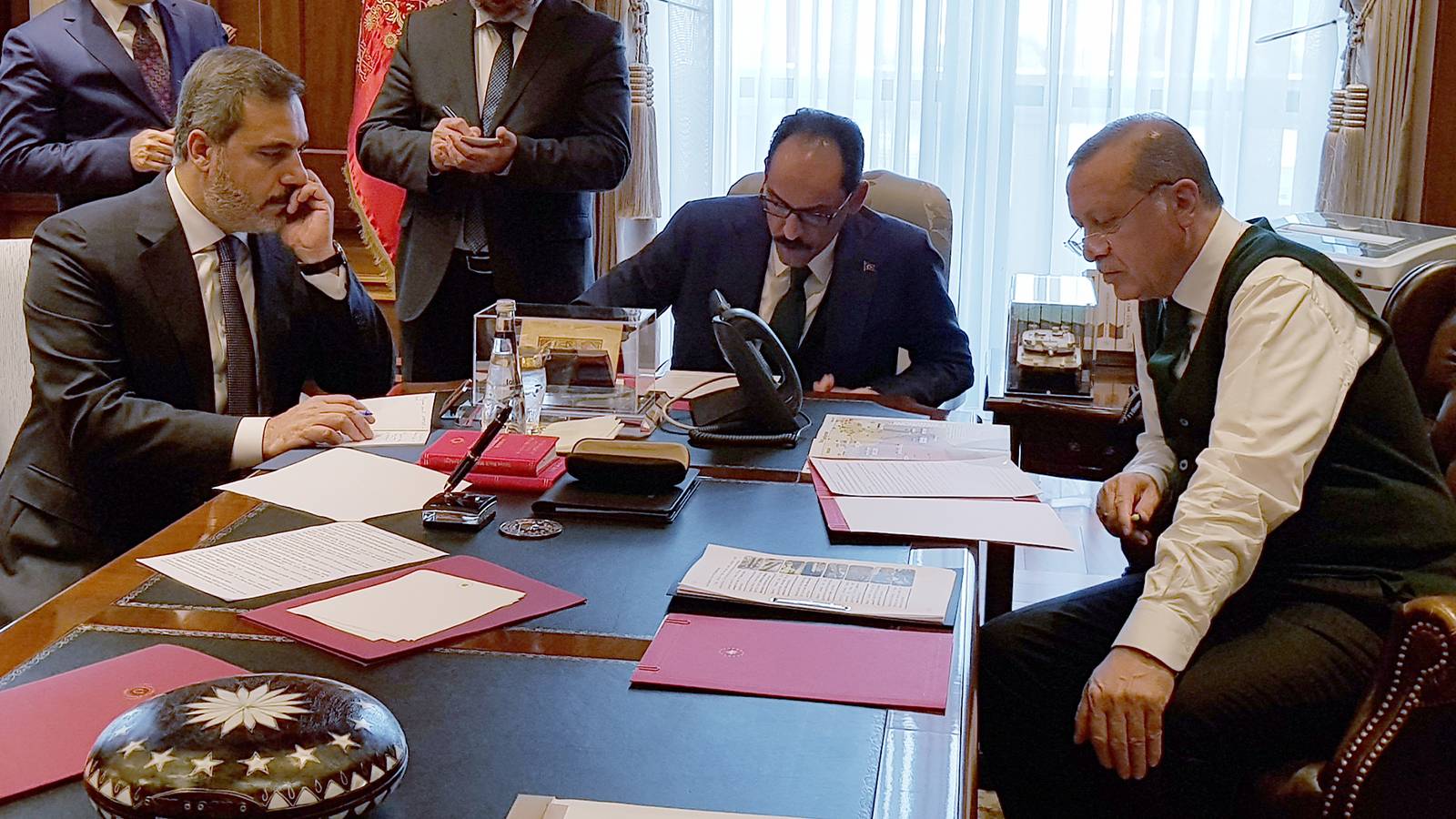
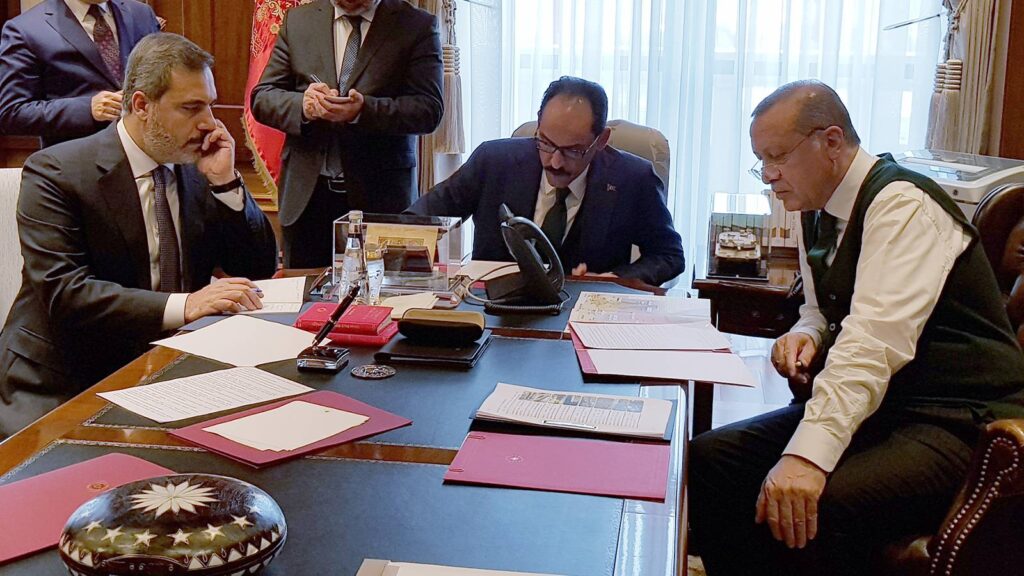
In the Iran war launched by the US and Israel, the country making the greatest effort to return to diplomacy is Türkiye. In the archival photo, President Erdoğan is seen during a diplomatic meeting alongside Foreign Minister Fidan and National Intelligence Organization (MİT) Director Kalın. (Photo: Presidency of the Republic of Türkiye)
First, let us note that there is no precedent in history for striking the initial blow against a target country by eliminating its top leadership cadres. What we are witnessing here is an entirely different concept of warfare. In the war against Iran launched by the US–Israel alliance, let us begin by examining the positions adopted by countries so far—starting with Türkiye, which is grappling simultaneously with the Russia–Ukraine war to its north, the Israel–Gaza crisis to its south, and the still-unsettled Syrian issue.
Six countries stand apart in their response to this war. Alongside Türkiye, China, Russia, Pakistan, Oman, and Venezuela have opposed both the US and Israel’s attack on Iran and any Iranian strikes against Arab countries in the Persian Gulf.
At present, Türkiye is the country making the most intensive effort worldwide to halt this war and give diplomacy a chance. This can be inferred from the traffic of meetings between national leaders and foreign ministers and their counterparts regarding the Iran crisis.
Breakdown of the Diplomatic Effort
We can place President Recep Tayyip Erdoğan’s February 28 conversation with US President Donald Trump in a separate category. After the first waves of attacks, Trump had also called UK Prime Minister Keir Starmer and the Emir of Kuwait. This conversation did not alter Türkiye’s position—maintained from the outset—of being “against military intervention in Iran and in favor of diplomacy.” On the contrary, it accelerated that stance.
On February 28, Erdoğan also spoke (as publicly disclosed) with the leaders of Qatar and the UAE; on March 1 with the leaders of Saudi Arabia and Kuwait and the President of the European Commission; and on March 2 with the NATO Secretary-General and the German Chancellor.
Foreign Minister Hakan Fidan likewise held talks on February 28 with his counterparts from Iran, Iraq, Saudi Arabia, Qatar, Syria, Egypt, Indonesia, the UAE, Spain, and Hungary, as well as with the EU’s High Representative for Security and Foreign Policy. On March 1 and 2, he spoke with the Foreign Ministers of Oman (the mediator of the suspended US–Israel talks), Iran (for the second time in 24 hours), Azerbaijan, Bulgaria, Jordan, and France.
Since February 28, Oman and Qatar have followed closely behind Türkiye in diplomatic efforts.
Though they may not phrase it this way, opposition parties in Türkiye—from the CHP to the DEM Party and the İYİ Party—are in practice aligned with the government on the common ground of staying out of the war and pushing diplomacy to its limits.
Russia and China in the Iran War
There had been expectations that Russia and China would back Iran in the war initiated by the US and Israel. Perhaps those most disappointed were the Eurasianists in Türkiye. Yet Moscow and Beijing have demonstrated they have no intention of opening a front against the US for the sake of the clerical regime in Tehran.
Russia is already heavily preoccupied with Ukraine and could likely source the weapons it has obtained from Iran from China or North Korea if needed. Moreover, Russia has recently shown no desire to damage its ties with Israel—this was evident in both Syria and Gaza.
China, meanwhile, is watching to see whether the Iran crisis might yield leverage over Taiwan, while also observing how quickly the US is depleting its stockpiles of rockets and bombs against Iran. These munitions are expensive and difficult to produce. Ultimately, if the current regime in Iran falls, Beijing will seek to purchase oil from whatever government replaces it.
Following the change of power in Syria, it has become evident in the US–Israel war that no capital wishes to stand alongside the Islamic Republic regime.
The Tragedy of the Arab Autocracies
The killing of Khamenei sent Shiite communities from Pakistan to Iraq, and from Yemen to Lebanon, into the streets.
This appears to concern neither the US nor Israel greatly, because Arab autocracies have begun, one by one, to fall into line in the Iran war. This is not solely due to Iranian rockets striking US bases—and now even cities—on their soil; they also fear alienating the US and are wary of tensions with their own Shiite populations. They seem to believe that maintaining alignment with Israel is the pathway to safeguarding those interests.
An example of the prevailing panic occurred on March 2 in Kuwait. Under heavy Iranian bombardment, a Kuwaiti air defense unit, with fingers on the trigger, shot down three US F-15E fighter jets in a “friendly fire” incident—using Patriot missiles.
As Iran’s rockets struck Saudi Arabia’s largest refinery, ARAMCO, Qatar halted operations at its LNG facilities. With tanker traffic in the Strait of Hormuz virtually grinding to a halt, oil and gas prices began rising rapidly. (This situation could adversely affect the Turkish economy and, through fuel, energy, transportation, and food costs, the well-being of citizens.)
Depending on how the Iran war unfolds, some Arab autocracies may face destabilization.
Europe’s Wavering
European leaders are wavering in the Iran war.
However, just as during Israel’s massacre in Gaza, Spain stands apart in this war by opposing the US–Israel alliance and banning the use of its bases by US aircraft for operations against Iran; Spanish PM Pedro Sanchez is an exception.
The leaders of Germany, France, and the United Kingdom—without mentioning the US and Israeli strikes on Iran or the killing of its leadership—condemned only Iran’s retaliation in their joint statements.
It is shameful that Europeans who rightly oppose the execution of 30,000 people and the killing of 70,000 protesters over 37 years under Khamenei’s rule in Iran close their eyes to the fact that the government of Israeli Prime Minister Benjamin Netanyahu has taken only 37 months to kill 70,000 Palestinians.
Migration Again, and Again Türkiye
Shortly after the United Kingdom softened its earlier decision not to allow its bases to be used in the Iran war—likely due to the brief time frame—an Iranian drone launched by Hezbollah in Lebanon fell on the sovereign British base of Akrotiri on the island of Cyprus. The UK scrambled its aircraft for “patrol purposes,” yet Prime Minister Keir Starmer—echoing what Fidan had said a week earlier—stated, “Regime change cannot be achieved by air operations,” and announced that Britain would not participate in operations beyond self-defense. Greece, believing it must protect Southern Cyprus, sent four F-16s and a frigate to the island.
Fears of the war’s expansion are spreading across the region. Even as Emmanuel Macron says he does not wish to enter the war, reports indicate that France’s sole aircraft carrier, the Charles de Gaulle, may be redeployed from the Baltic—where it had been stationed due to the Ukraine crisis—to the Mediterranean; Vladimir Putin must have smiled upon hearing that.
Amid the Iran crisis, the European Union has once again remembered Türkiye. European Commission President Ursula von der Leyen stated that she had a productive discussion with President Erdoğan regarding a potential migration wave. Meanwhile, Türkiye has closed its border with Iran to daily crossings; as officials insist that all precautions have been taken against a migration surge, this pleases the EU. Yet when it comes to updating the Customs Union or visa facilitation, the Cyprus obstacle once again appears before Ankara.
Trump Wants to Force Submission
On March 2, Trump made two significant statements. One was that they had killed 48 senior officials, including Supreme Leader Ali Khamenei, though not all of these reports have yet been verified. The second was his claim that although they had planned to eliminate Iran’s top leadership within four weeks, they had done so within one hour.
Interestingly, those targeted appear primarily to have been senior religious and military figures. However, it seems that figures who could serve as interlocutors if diplomacy resumes—such as President Masoud Pezeshkian, Foreign Minister Abbas Araghchi, and National Security Council Secretary Ali Larijani—have not, at least for now, been targeted. This fact, albeit faintly, keeps alive the possibility of a return to diplomacy.
Trump wants to see Iran’s leadership kneel and accept whatever it had refused even to discuss a week earlier.
Those who remain alive and in office in Iran may, despite political and social concessions, seek to preserve the “Islamic Republic” label. As seen in Venezuela, might they grant oil concessions to US companies? We shall see.
But Ankara must continue the correct course it followed in the Russia–Ukraine war: refraining from becoming a party to the conflict while striving to resolve it.