At a meeting in Ankara discussing the Terror-Free Türkiye process, it was mentioned that while only the Syria/SDG issue could disrupt the PKK’s disarmament and dissolution process, CHP operations are ‘infecting’ both the process and the government-opposition relations as the 2028 elections approach.
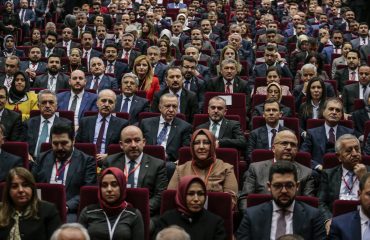
A workshop titled “Looking Together Toward a Shared Future” was held in Ankara on 1 December, bringing together around 60 representatives from political parties, business groups, civil society, research organizations, and the media. The event was jointly organized by the Diyarbakır-based Rawest and Kurdish Studies Center and the İzmir-based Bayetav. Discussions focused on the political, economic, legal, and regional-security dimensions of the government’s “Terror-Free Türkiye” initiative launched by the AK Party and MHP.
The meeting was conducted under Chatham House rules, allowing content to be reported without identifying speakers. Participants included MPs from the AK Party, CHP, DEM, the Yeni Yol group, and several other parties, whose presence added valuable “insider” perspectives to the debate.
Assessing the “Terror-Free Türkiye” Process
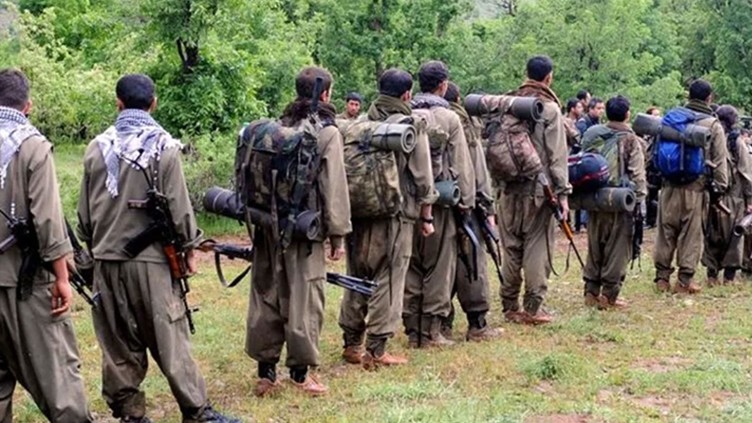
Participants generally acknowledged progress over the past year, though opinions differed on whether the PKK had genuinely dissolved or merely issued statements. Some argued the group remained active; others said symbolic acts such as “burning weapons” and withdrawing militants deeper into Iraq were undertaken in coordination with Turkish intelligence and the military.
A proposed “special law” outlining what demobilized militants may face in the next phase was discussed, with calls for an inclusive framework. The dominant view was that the “armed era” of the Kurdish question is effectively over—a perception widely shared among Kurdish voters.
Several speakers said the state is “ahead of politics” in this process. Unlike the 2012–2015 period, which sought “social legitimacy,” today’s effort is centered on “public authority legitimacy.” Many participants expressed satisfaction with the coordinating role played by intelligence chief İbrahim Kalın.
What Could Derail the Process?
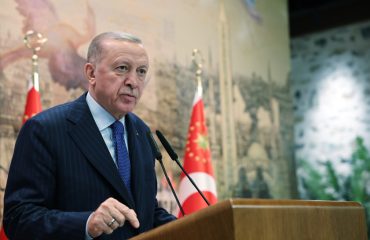
Government circles, echoing MHP leader Devlet Bahçeli’s recent remarks—“The arrow has left the bow; the ships have been burned”—believe a point of no return has been reached. Within this view, the state and Abdullah Öcalan, along with PKK-linked leadership structures, have already established the main contours of the process.
Despite this, the one factor almost all participants agreed could disrupt the initiative is Syria. The Syrian Democratic Forces (SDF) are seen as resisting the conditions for PKK dismantlement and disarmament by trying to present themselves as independent from the PKK. One participant added that the PKK rejecting the proposed “special law” could also pose a challenge, though most felt that stage had been passed.
Syria, the PKK, SDF, and Israel
Statements from senior PKK figures following the parliamentary commission’s 24 November visit to İmralı were interpreted either as attempts to prevent internal splits or as part of a “good cop–bad cop” strategy to buy time until an SDF–Damascus agreement emerges.
Emerging scenarios include removing non-Syrian PKK members from the SDF/YPG and persuading Arab tribes within the SDF. The most significant debate centered on whether Türkiye could accept a form of non-federal, decentralized governance—similar to provincial autonomy or UK-style devolved administrations—if the Syrian government under Ahmad Shara were to endorse it to preserve Syria’s territorial integrity.
Participants overwhelmingly agreed that Israel would likely attempt to obstruct Türkiye’s initiative, and that anti-compromise elements within the PKK might be receptive to signals—reportedly including willingness to confront Iran if necessary—coming from Israel.
CHP’s Position Seen as Creating Friction
Considerable debate focused on the CHP’s refusal to join the İmralı delegation, which some viewed as limiting broader social legitimacy for the peace effort. Some argued the CHP should “step up,” especially to match a process even the MHP is helping lead. Others—including some non-CHP voices—countered that the opposition party’s distrust of the AK Party was understandable given persistent political tensions.
While reintegrating PKK cadres into democratic life is being discussed, corruption investigations and the jailing or removal of opposition mayors are seen as “infecting” the process, undermining its democratic dimension and eroding trust. Although not expected to collapse the initiative, many felt easing AK Party–CHP tensions would strengthen the process.
AK Party’s Own Challenges
Another question raised was whether the AK Party itself is visibly championing the Terror-Free Türkiye process. Participants noted its cautious stance, partly influenced by international developments, and pointed out that the primary concern among the Kurdish electorate remains the economy.
A SAMER survey conducted in October 2025 across 16 predominantly Kurdish provinces found 59.7% citing the economic crisis and unemployment as the top issue, while 21.2% listed resolving the Kurdish question as their second priority.
Although the initiative aligns with the AK Party’s long-term strategy, timing is tight ahead of the 2028 elections. Speakers noted that peace processes take time; in Northern Ireland, for example, the 1998 disarmament decision was not fully implemented until 2005. If political change occurs in the next elections—potentially improving the regional climate—a reduction in government–opposition tensions would help the process move forward more effectively.
Overall, participants agreed the workshop was productive and came at a critical moment for the Terror-Free Türkiye initiative.