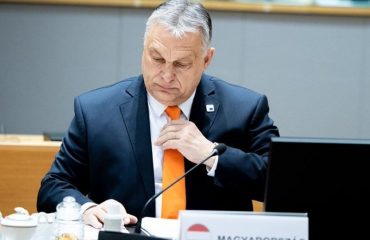

U.S. Special Envoy for Syria Barrack stated after he met with Foreign Minister Fidan in Ankara that the original purpose of the SDF has come to an end, and is no longer needed as the primary force against ISIS. This development also helps ease tension in Türkiye–U.S. relations. (Photo: X/ForeignMinistry)
U.S. Ambassador to Ankara and Special Envoy for Syria Tom Barrack said that his country no longer needs the SDF as the “primary ground force” in the fight against ISIS in Syria, and that its original purpose has “come to an end.” In a long message published on his X account (*) following his January 20 meeting with Foreign Minister Hakan Fidan in Ankara, Barrack argued that under the recognition of constitutional, social, and cultural rights by the “new Syrian state,” Kurds would gain “far more than the semi-autonomy offered by the SDF amid the chaos of civil war.”
The End of an Era
Barrack’s statement signals the end of a tense period in Turkish–U.S. relations that began when the United States, at a certain stage of the Syrian civil war that started in 2011, chose the PKK’s Syrian branch rather than NATO ally Türkiye as its partner in the fight against ISIS, starting with the 2014 Kobani battles.
At the time, the Obama administration—then in power in the United States—had the SDF established in 2015 to avoid formally cooperating with the PKK, which it designated as a terrorist organization. This was later publicly acknowledged by then–Special Operations Commander Raymond Thomas. Ankara had recently accused the SDF of being instrumentalized by Israel’s efforts to destabilize the region.
This dynamic became especially visible after the SDF signed an agreement with Damascus on March 10, 2025, and after Israel—supporting the Druze uprising during the summer—also pledged support to the SDF.
The SDF Tried U.S. Patience
Following the fluctuating tensions over the past three days between the Sharaa government and Abdi’s SDF, and after the SDF declared mobilization against Damascus and called on “all Kurds” to fight, Barrack arrived in Ankara around midday on January 20 to meet with Fidan.
After the Aleppo crisis that began the previous week, Barrack had mediated an agreement between SDF leader Mazloum Abdi and Damascus on January 18, based on a ceasefire framework they had agreed upon on January 17 in Erbil, hosted by Kurdistan Regional Government President Masoud Barzani. The agreement was aligned with Sharaa’s 14-point ceasefire proposal. Abdi stated that he accepted the deal to prevent “further bloodshed,” but during a meeting in Damascus on January 19, the SDF withdrew from the agreement. Subsequently, the SDF and the PKK declared mobilization.
Syrian, American, and Turkish officials interpreted this as evidence that Mazloum Abdi’s influence over the SDF had diminished and that decisions he made without PKK approval were rendered invalid.
Karayılan’s Statement, DEM Party Rally
Meanwhile, the Syrian army increased pressure on the SDF and PKK by surrounding the cities of Hasakah and Kobani (Ayn al-Arab). It became clear that if the SDF and PKK persisted with maximalist demands, they would also lose control of these two cities.
This was followed by a statement from senior PKK leader Murat Karayılan, accusing the United States of abandoning its “allies,” the SDF, who had captured ISIS’s former capital Raqqa and were guarding prisons holding ISIS militants and their families. Karayılan expressed regret, saying, “So it turns out they only look after their own interests.”
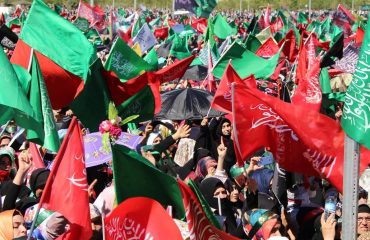
Around midday, tensions escalated further during a “Support for Rojava” march and rally organized by the DEM Party in the border town of Nusaybin, when some militants lowered the Turkish flag at the border. Strong reactions came from all segments of society, including DEM itself.
The statement Barrack made in the evening following his meeting with Fidan—seen as a potential turning point in Türkiye–U.S. relations—was then released. After this statement, it was announced that the SDF had once again reached an agreement with Damascus: Abdi would become Deputy Minister of Defense, and he would appoint the governor of Hasakah.